I was recently interviewed on the release of The Viking Sword. Thanks to Leslie S. Lowe and the Historical Novel Society. It was a fun experience and really made me think!
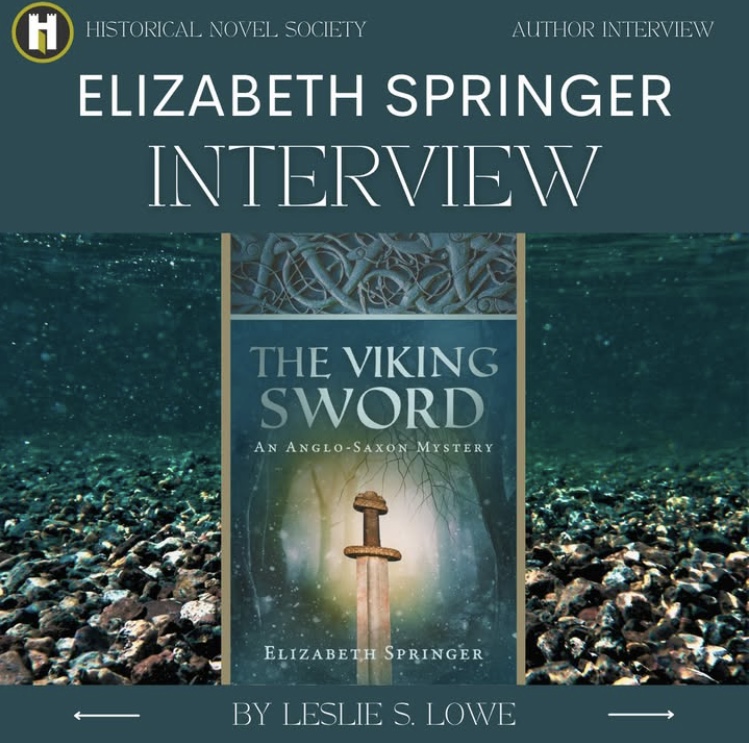
I was recently interviewed on the release of The Viking Sword. Thanks to Leslie S. Lowe and the Historical Novel Society. It was a fun experience and really made me think!

But was this the reason for his feeling of dread? Hard work, dead ends, great effort expended for no result–these were all in a day’s work in a case of the King’s justice. This was something else. He was conscious of a sense of foreboding, as if he was being dragged along by an inexorable Fate, ensnared in a course of events that was building to some terrible climax yet to come.
—The Viking Sword, Chapter 5
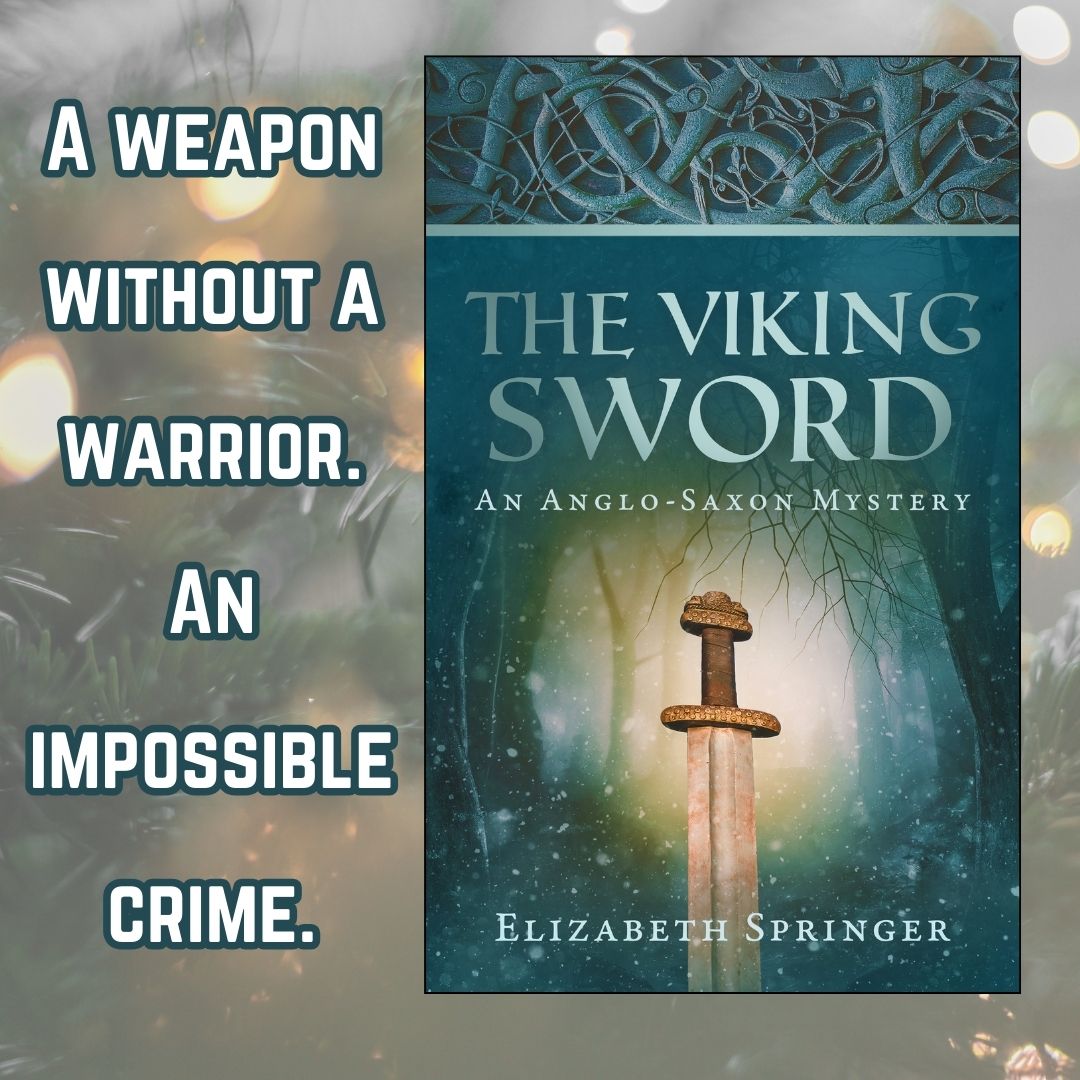
Today I’m happy to announce the publication of the second book in the Edwin of Wimborne Anglo-Saxon mystery series, The Viking Sword. This novel picks up a few months after A Council of Wolves with Edwin and Molly at home for what they incorrectly think will be a peaceful Christmas holiday.
There are several parallel mysteries in this book, two of which take place in locked rooms, and one involves a murder with a Viking sword. There are some missing treasures, an unexplained skeleton, and a kidnapping. Once again, Edwin composes some riddles as well as solving the crime. I had a lot of fun writing the story and I hope you will enjoy reading it.
The Viking Sword is available to order in paperback and ebook from most retail outlets, and you may also be able to request it from your library.
Amazon US: https://a.co/d/cXAbWLl
Amazon UK: https://amzn.eu/d/gDzh81D
Bookshop.org: https://bookshop.org/contributors/elizabeth-springer
Other ebook retailers such as Apple, Kobo, Barnes & Noble, etc.: https://books2read.com/u/49qzD8
Though Christmas has been observed for almost two thousand years, the celebration of the holiday has gone through many permutations over the years. Many of the festive traditions we now associate with Christmas are of relatively recent pedigree, at least in their present forms: Christmas trees, Christmas crackers, Santa Claus, roast turkeys, and so forth. Today, Christmas preparations and celebrations tend to swallow up all of December, and the holiday fizzles out abruptly the day after. Then we have a week of limbo before a final blow-out on New Year’s Eve. I know I’m not alone in finding this all a little exhausting!
How did the Anglo-Saxons celebrate Christmas? Unfortunately, not much information survives. When I say ‘not much information,’ I mean that all that survives from the six hundred years of Anglo-Saxon England are vague, passing mentions in various historical writings of a midwinter holiday being celebrated, as in this well-known passage from the year 878 in the Anglo-Saxon Chronicle:
In this year in midwinter after twelfth night the enemy army came stealthily to Chippenham, and occupied the land of the West Saxons and settled there, and drove a great part of the people across the sea, and conquered most of the others; and the people submitted to them, except King Alfred. (trans. Whitelock)
As for other Old English sources, the sermons of the tenth-century preacher Aelfric of Eynsham narrate the story of the Nativity in an endearingly Anglo-Saxon way: “Hi comon ða hrædlice, and gemetton Marian, and Ioseph, and þæt cild geled on anre binne, swa him se engel cydde,” which translates, “They came then quickly, and found Mary, and Joseph, and the child laid in a bin,* as the angel had announced to them.” There is also some strikingly beautiful religious poetry that shows that the Anglo-Saxons thought and felt deeply about the theological significance of this great day—on that more below.
*The Normans had not yet invaded and changed all the bins into mangers.
The basics
Just in case we are getting ahead of ourselves, let’s go back to the very beginning. What is Christmas? It is the celebration of the birth of Jesus Christ, the Son of God by the virgin Mary, in Bethlehem, as described in the Gospels of Matthew and Luke in the Bible (the Gospels of Mark and John do not include narratives of Jesus’ birth). Although the exact date of Christ’s birth was never recorded, early in church history the feast began to be celebrated around the time of the winter solstice, the shortest day of the year, which in the northern hemisphere occurs on December 21.
In 597, the Council of Tours instituted the twelve days between December 25 and January 6 as an official feast, to be preceded by a period of fasting during Advent.
Advent
This period of Advent fasting during the darkening days of December is a factor that has been largely lost sight of in modern times. Advent was traditionally the time when Christians would remember the long centuries of waiting for the promised Messiah to come (‘advent’ means ‘coming’) and release his people from slavery to sin. In the modern world we have our ‘fast’, as it were, in January, when we try to get our lifestyle back on track after a month of indulgence.
Some of the very oldest songs now considered Christmas carols are really Advent hymns. “Of the Father’s Love Begotten,” (tune: DIVINUM MYSTERIUM) “Let All Mortal Flesh Keep Silence,” (tune: PICARDY) and “O Come, O Come, Emmanuel” (tune: VENI EMMANUEL) are three well-known examples. The words to these hymns date to the late Roman and early medieval periods, and were translated into English in the Victorian era. The haunting minor-key tunes that are now used to accompany the hymns date to the Late Medieval and Renaissance periods—so these Advent hymns represent layer upon layer of church history.
“O Come, O Come, Emmanuel” is based on the O Antiphons, advent poems in Latin probably written in Italy and dating to the sixth century. Each of these poems is a ‘cento’—a poem made up of quotations from other works, in this case Bible verses. The O Antiphons were known in the Anglo-Saxon period and inspired an ‘expanded version’ which is found in the Exeter Book. These poems explore the fulfillment of Old Testament prophecy in the birth of Christ. See Eleanor Parker’s blog for an excellent translation and discussion of these poems. https://aclerkofoxford.blogspot.com/2013/12/the-anglo-saxon-o-antiphons-o-clavis.html
Yule, Midwinter, and Christmas
Yule, or Geola (with g pronounced as y) is the old pre-Christian name for the midwinter holiday, named after the months of December-January in which it occurred. Bede wrote in his De temporum ratione (The Reckoning of Time) that the pagan Anglo-Saxons celebrated a festival at the end of December. What they celebrated, or how they celebrated, Bede did not know; he merely notes that the night of December 25 was referred to as Modranecht, ‘Mother’s Night,’ probably because of some kind of ceremony they did back then.
Yule has remained a synonym for Christmastime in English ever since. In Scandinavia, it is the only name for Christmas! The name for the Christian holiday attested during Edwin and Molly’s time is Middewinter. The name Cristesmaesse appears in Old English documents around the year 1000. In The Viking Sword, I alternated these names as a compromise between historical authenticity and the desire to evoke the strong seasonal associations of modern readers with the word Christmas.
Fact and Fiction
So you see my predicament. As I worked on The Viking Sword, I found myself in the same situation as when I had to portray Edwin and Molly’s wedding in A Council of Wolves—there is a distinct lack of source material about how these special days were celebrated. What’s an author to do? Scholarly and popular history writing is full of ‘maybes’ and ‘might haves’ concerning how Christmas was celebrated so long ago, and that is entirely proper. But when you are writing a novel, you have to weigh the ‘maybes’ and ‘might haves,’ and decide on something for your characters to do in the world you have created for them. With this in mind, I included a few seasonal traditions that seemed most likely to have been followed in the ninth century.

Yule logs
The Yule log seems like a very ancient tradition, and it may very well be, but I was surprised to find out that there’s no firm evidence one way or the other. The first written reference in English to a special log that is burned at Christmas dates to 1648, when the poet Robert Herrick mentions a ‘Christmas log,’ and the term ‘Yule log’ appears in other sources around the same time. However, the tradition of having a massive log that you light at midnight on Christmas Eve is a tradition found throughout Europe. As a scholar, I could not make a convicing case from the existing source material that the Anglo-Saxons certainly had a Yule log tradition. As a historical novelist, however, I saw no reason why they should not have one, since the Yule log is such a long-standing and widespread custom. And since holly and ivy are the principal native evergreens in England, I allowed the Anglo-Saxon halls in the novel to be decked with them, though there is no explicit evidence that I know of for that, either.

The Advent fast was broken on Christmas Day when the twelve days of Christmas began. Some of the days within the twelve-day feast had their own dedication or significance: the 26th was St. Stephen’s Day, the 27th was the feast of St. John, the 28th was Childermas (Feast of the Holy Innocents), the 31st was St. Sylvester’s Day, and the 1st of January was the feast of Christ’s circumcision, as it falls eight days after the 25th.
Anytime between Christmas Day and Epiphany (January 6) may have been the traditional time to give gifts. In the eighth century, Ecgbert, Bishop of York wrote that the English customarily gave alms to monasteries and to the poor before and during the twelve days of Christmas. A king such as Alfred didn’t just give to monasteries at Christmas—he gave two monasteries to his friend Bishop Asser, along with a silk cloak and a quantity of incense weighing the same as a man (Asser’s Life of King Alfred, par. 81). Christmas is also a common date on charters, so apparently the king and court got some business done as well while they were all together in one place. The celebrations continued until Epiphany, the traditional date when the visit of the Magi to the infant Christ was celebrated (see Matthew chapter 2).
Which brings me to the Kings’ Cake eaten at the end of The Viking Sword. This cake is to celebrate the arrival of the Three Kings in Bethlehem. (The Bible speaks of an unspecified number of wise men, or as Aelfric calls them, tungel-witegan, ‘star-wise-men,’ bearing three gifts of prophetic significance for the baby Jesus.)
The King Cake tradition is said to derive from Saturnalia, the ancient Roman winter holiday when masters and servants traded places for a week of madcap highjinks and shenanigans. Typically, some small inedible item is hidden in the King Cake. Whoever gets the item—a coin, a bean, a plastic baby—either receives some benefit or privilege, like good luck or getting to be the Lord of Misrule (hence the Saturnalia connection), or has some duty, like buying the King Cake for the office next year. King Cake, also called Twelfth-night Cake, is documented as an English tradition from the Middle Ages into the 18th century, but died away during the Industrial Revolution. It is still popular in continental European countries and in my father’s home state of Louisiana. The “holiday cake with hidden prize” tradition survives in some British family traditions in which a coin is hidden in the Christmas cake or pudding. This tradition has given rise to at least one great British mystery story, “The Adventure of the Christmas Pudding” by Agatha Christie (dramatized as The Theft of the Royal Ruby in 1990).

Because of the Louisiana connection, I have always associated King Cake with Mardi Gras (known in England as Shrove Tuesday or Pancake Day). This is the day before Ash Wednesday, the beginning of the Lenten fast, forty days before Easter—a different season and holiday altogether! Pleasure-loving Louisianians consider King Cake season to stretch from Epiphany until Mardi Gras. That gives everyone in the state plenty of time to enjoy this indulgent seasonal treat.
Back to Christmas in the days of King Alfred. Though I write fiction, I want to portray the history and culture of ninth-century Wessex as accurately as possible. I have had to sift through the bare bones of information available from the period, piece together what is likely based on surviving customs, and breathe life into these relics using my own experience about what people consider to be appropriate to a special life celebration or holiday.
Almost everywhere in the world on such occasions there will be special food and drink, special religious observances and music, a change of home decorations and clothing, exchange of gifts, and shared family rituals or traditions like dancing and games. If all the expected elements are included, people have a sense of a holiday properly celebrated, everyday routine suspended, a moment in the year marked. Strong feelings may be stirred if a cherished tradition is neglected, or if a person has to miss an event while others celebrate. In my portrayal of Edwin and Molly’s first Christmas together, I’ve tried to imagine how Anglo-Saxon people would feel about little details of the holiday and what they would find most meaningful. I hope this aspect rings true, and helps you, the reader, enter deeper into the story. The choice to set The Viking Sword at Christmas has given me a whole new appreciation of Christmas and how it was celebrated in the past, and I’m glad to have the opportunity to share this appreciation with you.
This series of blog posts features my favorite mystery and historical fiction authors.
Edith Pargeter (1913-1995) was the author of the Brother Cadfael mystery series. She was born and bred in Shropshire, England. Her long and prolific writing career, beginning in 1936, included short stories, contemporary crime fiction, historical novels, and historical mysteries under various pseudonyms, including Ellis Peters. She was also a translator. After visiting Czechoslovakia in 1947, she became fluent in Czech and translated Czech literature into English.
I first came in contact with her Brother Cadfael medieval mystery series on a visit to a friend who lived in Shrewsbury. The people there were prodigiously proud of their local mystery author, and I was soon hooked as well.

The main character is a Welsh monk at the Benedictine abbey of St. Peter and St. Paul at Shrewsbury during the Anarchy (1138-1153), one of England’s several civil wars. Brother Cadfael is a former crusader, so he has a lot of experience with people, travel, and violent injuries, and he is also an herbalist, so he knows about poison. With these qualifications, he makes a great detective. He becomes friends with the sheriff of Shropshire, and this gives him access to more information and manpower than he would otherwise have. The series addresses many aspects of medieval life and thought, giving the stories great variety. There are twenty books in the series, as well as several short stories. The books progress sequentially with an overall character arc for Cadfael, but they will still make sense if you read them out of sequence.
As a postgrad, I found that all my medieval studies colleagues loved the Cadfael books—almost as a guilty pleasure, because they were so fun to read and had no footnotes or bibliography to get through! Once, one of my friends in the department brought me her box set to read when I was ill.
I was delighted when some of the books were made into a TV series starring Sir Derek Jacobi. Although I love the shows, in my opinion some of the best stories were never filmed. This was probably for budgetary reasons. For instance, the last book, Brother Cadfael’s Penance, involves events in several cities and the siege and capture of a castle.
The first Brother Cadfael book was published in 1977, when historical mysteries were virtually unknown. In fact, this series is credited with popularizing historical mystery as a distinct subgenre. To me, it’s interesting to contrast the early covers of Cadfael books with later versions once the series became popular. At first, it seems, her publisher didn’t know how to market a detective novel set in the Middle Ages, so with these early editions, there is little on the cover that suggests the time period.
Ellis Peters ‘hit the big time,’ as they say, in about 1980, when she had been writing for decades and had finished her third Cadfael book. The catalyst, ironically, was the publication of The Name of the Rose by Umberto Eco. This was a mainstream bestseller, and all of a sudden the reading public was yearning for more medieval mysteries. Now Ellis Peters’ publishers began to lean into the historical aspect of the series, and the book covers reflect the medieval setting. The ‘illuminated manuscript’ covers are the ones I like best. They were the ones I was irresistibly drawn to in a bookshop or library. With a cover like that, you know it’s going to be good.
The Cadfael books are written in a literary style, with fine descriptions of landscape and character. Many readers, including me, love this aspect of Peters’ writing. However, readers accustomed to the more pared-down style of contemporary mystery novels may find her work slow going. Also, Peters writes a little romance sub-plot into each story. Including some star-crossed lovers for Cadfael to help allows Peters to bring out Cadfael’s grandfatherly side and it adds some youthful freshness to the cast of characters.

Ellis Peters will always have a place in my heart. She is an inspiration to me both as a translator (my day job) and as a mystery novelist. In fact, it’s because of Ellis Peters that I am an author today. One day back when we were newlyweds, my husband and I were sitting at the kitchen table talking. One of us said, “The Brother Cadfael books are so good. Too bad there aren’t any mystery novels set in Anglo-Saxon times.” We looked at each other with a wild surmise…and before we knew it, Edwin was born in our imaginations. Have you read any of the Cadfael books? What did you think?
By Joseph F. Springer
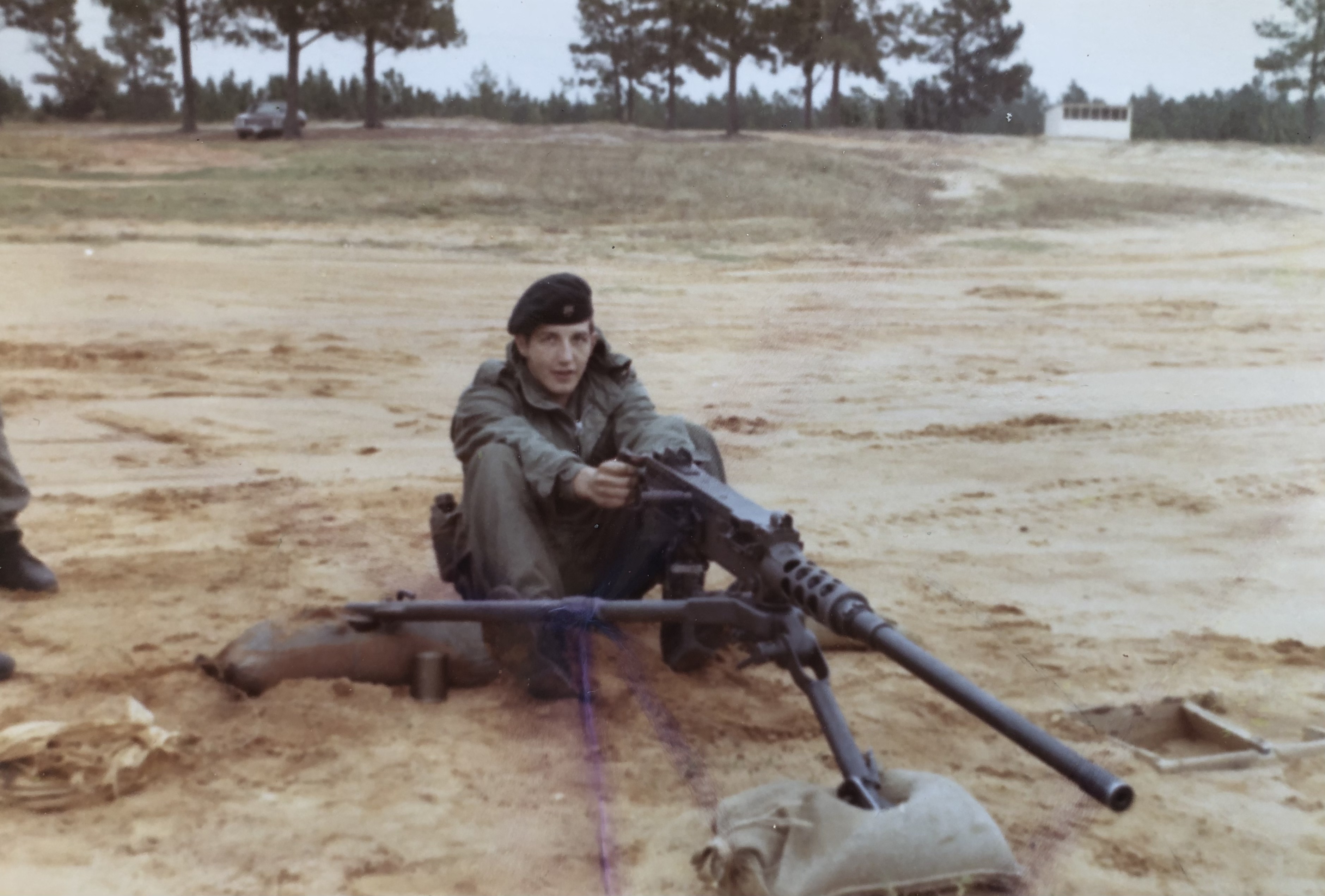
This is a posthumous guest blog by my dad, who wrote this piece as a young officer in the U.S. Army. His career also included stints in the Coast Guard and law enforcement. Dad passed away in May 2023. He taught me a lot about writing, military history, the warrior mentality, and real-life swashbuckling.

From earliest childhood, I wanted to be a military officer. Like most would-be heroes I looked to books, movies, and television for a role model. I read most of the military history books in the local library and I watched fascinated as John Wayne stormed across The Sands of Iwo Jima. The person I most identified with, however, was Errol Flynn. I saw all of his movies. When he played Robin Hood, I wanted to be a guerilla and live in Sherwood Forest. When he was Captain Blood, I wanted to be a sailor; and when he led the Charge of the Light Brigade, I rode with him in the cavalry. The characters that he portrayed were always correct in every situation and had the respect of friends and enemies alike. His characters seldom lost a battle; and when they did, they did it with style. Certainly, Mr. Flynn must have been doing something right as a military leader. I wanted nothing more than to be just like him. His philosophy of leadership became my philosophy of leadership, too. From a very early age, I was convinced that he showed how a military leader should act. I remain convinced twenty years later. Despite the public blasting that Mr. Flynn’s private reputation has taken recently, I submit that his old movies are good training films for aspiring leaders. Good script writers did not hurt Errol Flynn’s fictitious military career. However, he also subscribed to some of the standards of military leadership.
First, Mr. Flynn portrayed men of action. Action is precipitated by initiative and decisiveness—both are traits of the military leader. Many more battles are lost because leaders hesitate than because they act rashly. Of course, a leader cannot be expected to act decisively unless he knows what he is doing. However, the answer to every question is not found in “the book.” Initiative and decisiveness are the traits that make a leader. A person who possesses only those two qualities may be a poor leader, but he is still a leader. One who can claim all of the other leadership traits except those two is only a follower. Mr. Flynn was a master at sizing up a situation and taking appropriate action.
Second, Errol Flynn was easy to recognize as a leader because he was always in front of this troops. He was the first to cross swords with the Sheriff of Nottingham in Robin Hood and he was the first out of the door in Paratrooper. He did not spend a lot of time hanging around the TOC. “Follow Me” was no hollow slogan to Errol Flynn and it was clear that his men took courage from the sight of their leader out front, showing the way.
Military bearing was a third quality considered important by all of the Errol Flynn characters. They realized that the way a leader looks and carries himself has a major impact on the way he is perceived by his subordinates. A leader cannot ethically dictate a policy that he is unwilling to follow himself. An overweight officer will have a difficult time convincing his men of the importance of physical training. A commander who runs around frantically at the first hint of an emergency does not convey an impression of confidence to his men. When troops see a nervous officer, they conclude that there must be something to be nervous about. Errol Flynn displayed a great deal of military bearing and was nothing if not cool under fire.
Perhaps his coolness came from the fourth and most nebulous of all qualities—courage. I am sure that Mr. Flynn realized that heroes, like leaders, are made and not born. At some point, every combat arms professional must take a cold and objective look at the job that he has chosen for himself. One has to pay dues to be a member of the combat fraternity. At any time in the future, he must be willing to pay up. The dues may be his arm, his leg, or his life. Such ar the facts of combat. It does not always happen to the other guy. If he feels that the risks outweigh the rewards, he can move on to a less demanding branch of the Army or into civilian life. If he decides that, in his heart of hearts, he is a soldier, he can start preparing himself mentally to be resolute in the face of danger. Thus prepared, when the time comes, he has one less decision to make in the heat of combat. Apparently, those characters played by Mr. Flynn had completed this critical self-examination and had not found themselves lacking.
A fifth recurring theme in Errol Flynn movies was that of technical competence on the part of the hero. Whether he was dealing death with a bow and arrow in Robin Hood or with a Sopwith Camel in Dawn Patrol, he always did it well. Not only did he know what he was doing, but he also knew what those in his unit were supposed to do. A leader can do no less. Unless he can make use of all the resources at his disposal, a leader is not using his unit to its full capacity. Troops can tell when a commander knows what he is doing and they are reluctant to follow one who does not.
Next, Errol Flynn always saw to it that his soldiers (and sailors when he was in that role) received the best possible treatment under the prevailing conditions. Although they were living in the middle of Sherwood Forest, the Merry Men always had fresh meat on the spit and plenty of wine to pass around. Robin Hood did not feel it necessary to make his troops miserable the whole time they were in the field. Then as now, soldiers can understand which hardships are unavoidable and which are caused by thoughtlessness or poor planning on the part of their leaders. It is inexcusable for a leader to eat or sleep in a dry tent while his troops are shivering in the rain. Merry Men tend to stay merry much longer if their leader attempts to minimize their misery when it is not necessary.
A seventh leadership quality exhibited by Errol Flynn’s characters was that of forthrightness. Intrigue rarely figured in an Errol Flynn movie. The plots, like the heroes, were simple and straightforward. When things went badly, Mr. Flynn let his men know about it. When his troops were asked to storm an impregnable fortress or walk out from behind enemy lines, they knew what the odds were. They also knew that their boss would be with them all the way.
The eighth and final thing that I remember about Errol Flynn movies is that the characters that he played enjoyed what they were doing. They were swashbucklers and made no apologies for their profession. They did not do to the things that they did for the purpose of enhancing their careers. They were soldiers because they liked soldiering. They were combat leaders, not corporate managers; and they showed no desire to want to escape to any other forms of duty. Troops can detect such an attitude. They can tell when their leaders want to be with them and when they are doing troop duty only because they have to for the sake of their careers. Enthusiasm is contagious and Errol Flynn knew it. As I said earlier, I feel that the leadership qualities that I learned from Errol Flynn during my childhood are as valid now as they were then. In fact, the things that I have learned in the military reinforce the Saturday afternoon lessons taught by Errol Flynn. His movies were a graphic demonstration of accepted principles of military leadership. Real heroes from Robert Rogers to Evans Carlson and William Derby have used these same eight traits to good effect. To these eight leadership principles I add the moral principles of honesty, justice, and loyalty to complete my philosophy of leadership. I feel that this philosophy rests on a firm foundation. There is still room for the swashbuckler in the modern military. Now, if only they would bring back the horse cavalry.
My first Anglo-Saxon mystery will be published very soon. Stay tuned!

A blog about the Edwin of Wimborne medieval mystery series, the Anglo-Saxons and Vikings, and detective fiction.
Spoiler-Free Reviews of Fair Play Detective Fiction
A blog about the Edwin of Wimborne medieval mystery series, the Anglo-Saxons and Vikings, and detective fiction.
A blog about the Edwin of Wimborne medieval mystery series, the Anglo-Saxons and Vikings, and detective fiction.
 Elizabeth Springer, Author