By Joseph F. Springer
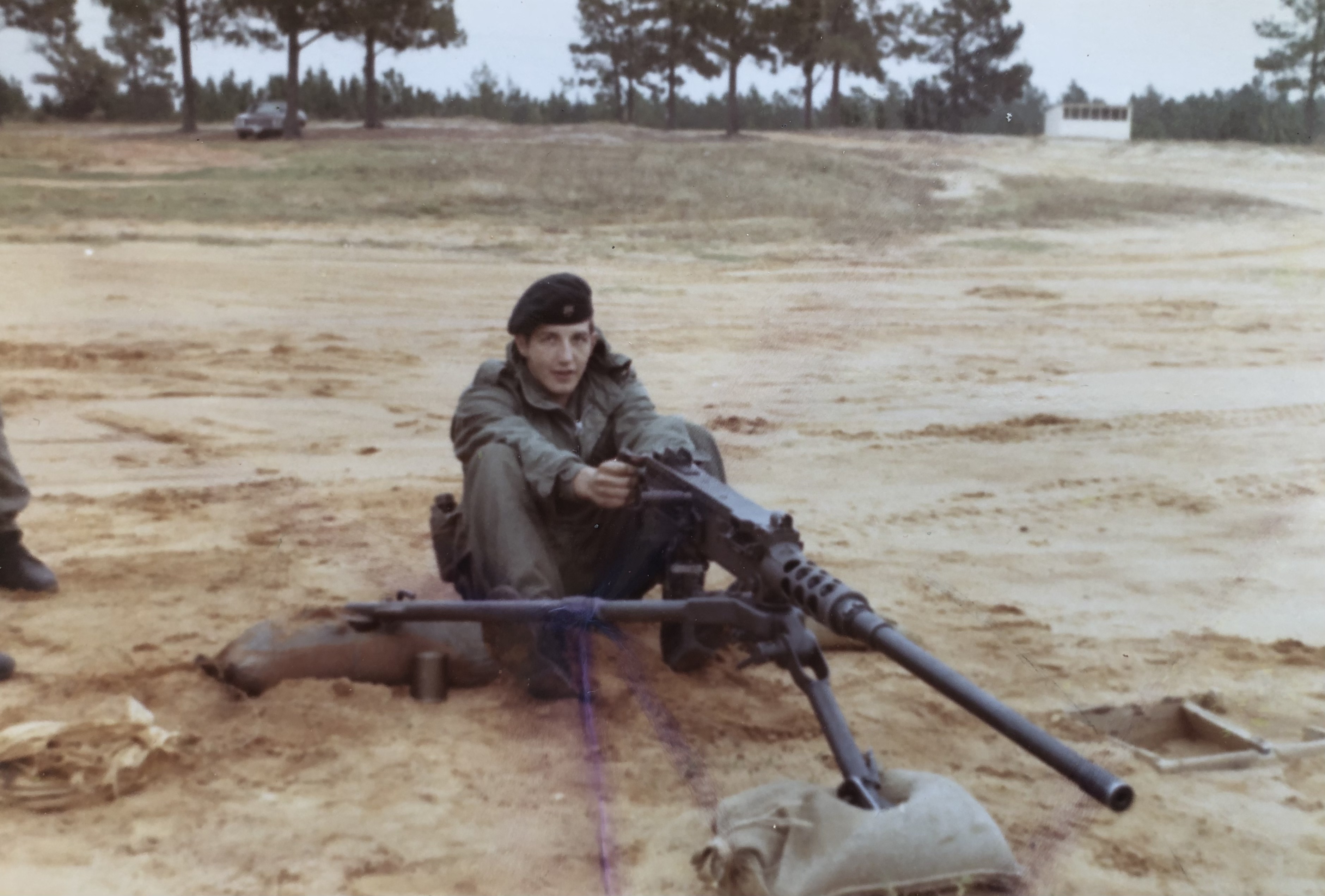
This is a posthumous guest blog by my dad, who wrote this piece as a young officer in the U.S. Army. His career also included stints in the Coast Guard and law enforcement. Dad passed away in May 2023. He taught me a lot about writing, military history, the warrior mentality, and real-life swashbuckling.

From earliest childhood, I wanted to be a military officer. Like most would-be heroes I looked to books, movies, and television for a role model. I read most of the military history books in the local library and I watched fascinated as John Wayne stormed across The Sands of Iwo Jima. The person I most identified with, however, was Errol Flynn. I saw all of his movies. When he played Robin Hood, I wanted to be a guerilla and live in Sherwood Forest. When he was Captain Blood, I wanted to be a sailor; and when he led the Charge of the Light Brigade, I rode with him in the cavalry. The characters that he portrayed were always correct in every situation and had the respect of friends and enemies alike. His characters seldom lost a battle; and when they did, they did it with style. Certainly, Mr. Flynn must have been doing something right as a military leader. I wanted nothing more than to be just like him. His philosophy of leadership became my philosophy of leadership, too. From a very early age, I was convinced that he showed how a military leader should act. I remain convinced twenty years later. Despite the public blasting that Mr. Flynn’s private reputation has taken recently, I submit that his old movies are good training films for aspiring leaders. Good script writers did not hurt Errol Flynn’s fictitious military career. However, he also subscribed to some of the standards of military leadership.
First, Mr. Flynn portrayed men of action. Action is precipitated by initiative and decisiveness—both are traits of the military leader. Many more battles are lost because leaders hesitate than because they act rashly. Of course, a leader cannot be expected to act decisively unless he knows what he is doing. However, the answer to every question is not found in “the book.” Initiative and decisiveness are the traits that make a leader. A person who possesses only those two qualities may be a poor leader, but he is still a leader. One who can claim all of the other leadership traits except those two is only a follower. Mr. Flynn was a master at sizing up a situation and taking appropriate action.
Second, Errol Flynn was easy to recognize as a leader because he was always in front of this troops. He was the first to cross swords with the Sheriff of Nottingham in Robin Hood and he was the first out of the door in Paratrooper. He did not spend a lot of time hanging around the TOC. “Follow Me” was no hollow slogan to Errol Flynn and it was clear that his men took courage from the sight of their leader out front, showing the way.
Military bearing was a third quality considered important by all of the Errol Flynn characters. They realized that the way a leader looks and carries himself has a major impact on the way he is perceived by his subordinates. A leader cannot ethically dictate a policy that he is unwilling to follow himself. An overweight officer will have a difficult time convincing his men of the importance of physical training. A commander who runs around frantically at the first hint of an emergency does not convey an impression of confidence to his men. When troops see a nervous officer, they conclude that there must be something to be nervous about. Errol Flynn displayed a great deal of military bearing and was nothing if not cool under fire.
Perhaps his coolness came from the fourth and most nebulous of all qualities—courage. I am sure that Mr. Flynn realized that heroes, like leaders, are made and not born. At some point, every combat arms professional must take a cold and objective look at the job that he has chosen for himself. One has to pay dues to be a member of the combat fraternity. At any time in the future, he must be willing to pay up. The dues may be his arm, his leg, or his life. Such ar the facts of combat. It does not always happen to the other guy. If he feels that the risks outweigh the rewards, he can move on to a less demanding branch of the Army or into civilian life. If he decides that, in his heart of hearts, he is a soldier, he can start preparing himself mentally to be resolute in the face of danger. Thus prepared, when the time comes, he has one less decision to make in the heat of combat. Apparently, those characters played by Mr. Flynn had completed this critical self-examination and had not found themselves lacking.
A fifth recurring theme in Errol Flynn movies was that of technical competence on the part of the hero. Whether he was dealing death with a bow and arrow in Robin Hood or with a Sopwith Camel in Dawn Patrol, he always did it well. Not only did he know what he was doing, but he also knew what those in his unit were supposed to do. A leader can do no less. Unless he can make use of all the resources at his disposal, a leader is not using his unit to its full capacity. Troops can tell when a commander knows what he is doing and they are reluctant to follow one who does not.
Next, Errol Flynn always saw to it that his soldiers (and sailors when he was in that role) received the best possible treatment under the prevailing conditions. Although they were living in the middle of Sherwood Forest, the Merry Men always had fresh meat on the spit and plenty of wine to pass around. Robin Hood did not feel it necessary to make his troops miserable the whole time they were in the field. Then as now, soldiers can understand which hardships are unavoidable and which are caused by thoughtlessness or poor planning on the part of their leaders. It is inexcusable for a leader to eat or sleep in a dry tent while his troops are shivering in the rain. Merry Men tend to stay merry much longer if their leader attempts to minimize their misery when it is not necessary.
A seventh leadership quality exhibited by Errol Flynn’s characters was that of forthrightness. Intrigue rarely figured in an Errol Flynn movie. The plots, like the heroes, were simple and straightforward. When things went badly, Mr. Flynn let his men know about it. When his troops were asked to storm an impregnable fortress or walk out from behind enemy lines, they knew what the odds were. They also knew that their boss would be with them all the way.
The eighth and final thing that I remember about Errol Flynn movies is that the characters that he played enjoyed what they were doing. They were swashbucklers and made no apologies for their profession. They did not do to the things that they did for the purpose of enhancing their careers. They were soldiers because they liked soldiering. They were combat leaders, not corporate managers; and they showed no desire to want to escape to any other forms of duty. Troops can detect such an attitude. They can tell when their leaders want to be with them and when they are doing troop duty only because they have to for the sake of their careers. Enthusiasm is contagious and Errol Flynn knew it. As I said earlier, I feel that the leadership qualities that I learned from Errol Flynn during my childhood are as valid now as they were then. In fact, the things that I have learned in the military reinforce the Saturday afternoon lessons taught by Errol Flynn. His movies were a graphic demonstration of accepted principles of military leadership. Real heroes from Robert Rogers to Evans Carlson and William Derby have used these same eight traits to good effect. To these eight leadership principles I add the moral principles of honesty, justice, and loyalty to complete my philosophy of leadership. I feel that this philosophy rests on a firm foundation. There is still room for the swashbuckler in the modern military. Now, if only they would bring back the horse cavalry.
 Elizabeth Springer, Author